
Blog
Isuzu N-Series vs F-Series: Key Differences Explained
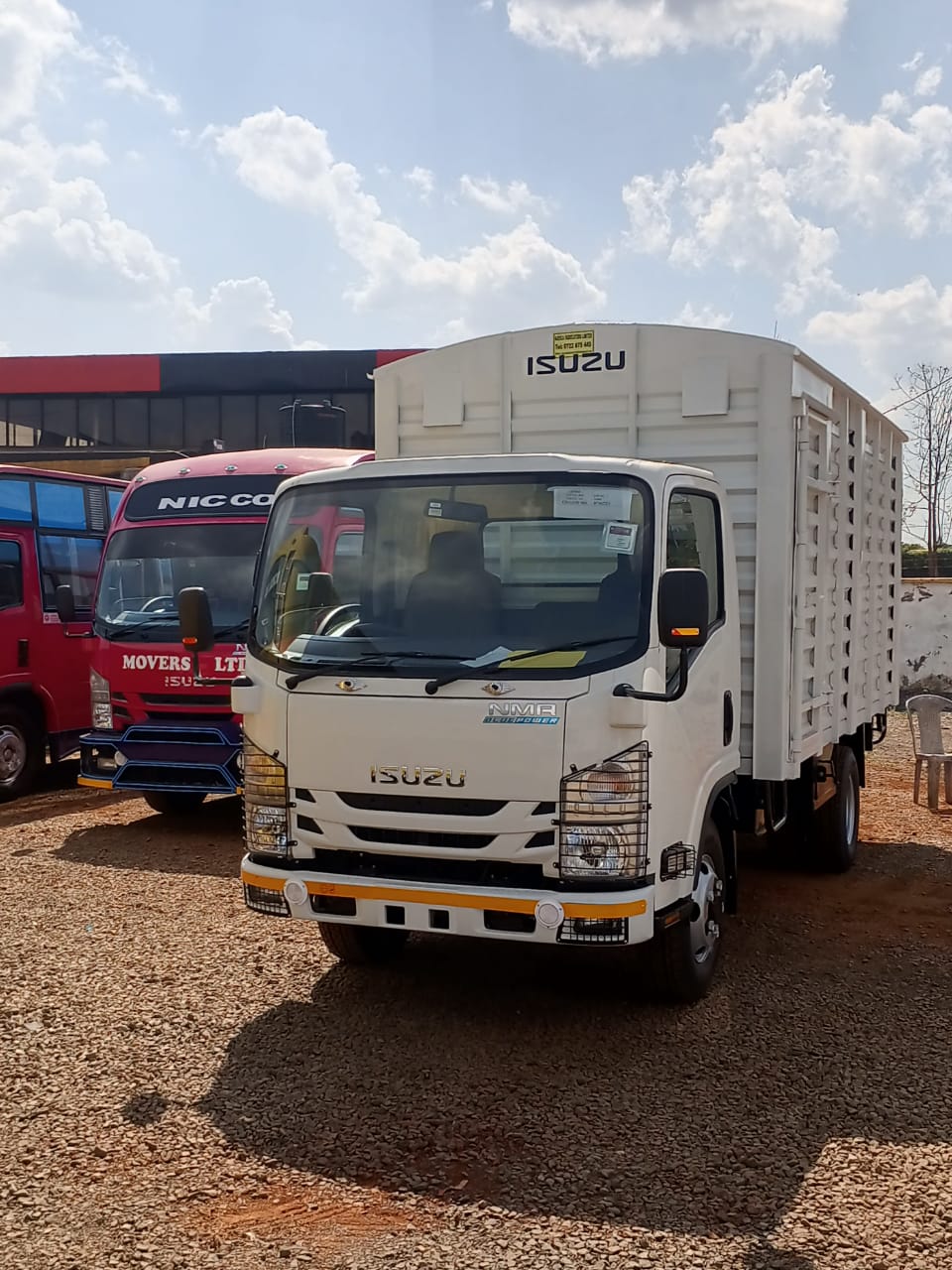
Choosing the right truck is a really important decision for your business.
The right vehicle should match your load requirements, operating conditions, routes and the type of work you do.
In Kenya, two of the key Isuzu truck ranges available to businesses are the Isuzu N-Series and F-Series.
While both are designed for commercial transportation, they serve different levels of operation.
So, what is the difference between the Isuzu N-Series and F-Series? and which one is right for your business?
Let us take a closer look.
The simplest way to understand the difference is to look at how the two ranges are positioned.
The Isuzu N-Series is a light-duty truck range designed for businesses involved in distribution, deliveries and general cargo transportation.
The Isuzu F-Series is a medium-duty range designed for businesses that require greater vehicle capacity, more engine power and a platform suited to heavier commercial applications.
The exact specifications vary between individual models, so the right choice depends on your load, application, body configuration and operating requirements.
Need help choosing the right Isuzu truck?Don’t choose a truck based on size alone.
At Kamaru-Isuzu & UD Trucks, we help businesses select the right Isuzu truck based on their specific requirements from the chassis to the body configuration. Call us On 0722320706
1. Vehicle Size and Capacity
One of the main differences between the two ranges is their overall vehicle capacity.
The N-Series models available in Kenya range from smaller light-duty trucks such as the NLR77E to larger models such as the NQR Xtra.
Depending on the model, the N-Series covers GVW ratings from approximately 4,100 kg to 8,500 kg.
The F-Series starts at a higher capacity. For example, the FRR90N has a GVW of approximately 11,000 kg, while larger F-Series models offer significantly higher GVW ratings.
The N-Series is generally suited to lighter commercial transportation and distribution, while the F-Series provides platforms for heavier commercial operations.
The important consideration is to choose a truck based on your actual requirements rather than simply choosing the largest available model.
2. Engine Power and Performance
Engine capacity and power also differ between the two ranges.
The N-Series includes engines designed for light-duty commercial transportation. For example, the NLR77E uses a 3.0-litre engine, while NQR models use engines of approximately 4.8 litres.
The F-Series moves into a higher engine-capacity and power category. Depending on the model, F-Series trucks use engines ranging from approximately 5.2 litres to 7.8 litres, with power outputs reaching around 280 hp in larger models.
This higher engine capacity and power make the F-Series suitable for applications involving heavier loads and more demanding commercial operations.
3. What are N-Series Trucks Used For?
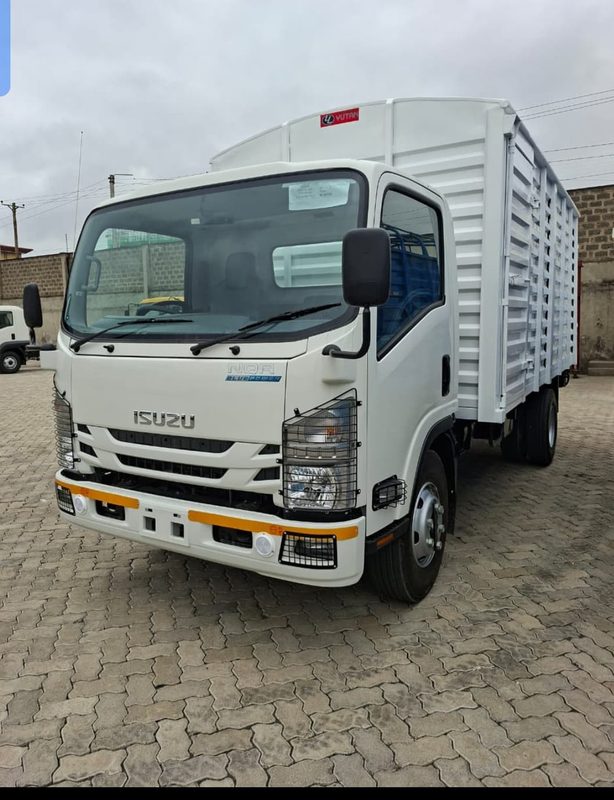
The N-Series can be a practical option for businesses involved in:
i. Retail distribution
ii. Beverage distribution
iii. Agricultural produce
iv. Transportation
v. Building-material deliveries
vi. local and regional deliveries
Its light-duty platform makes it suitable for businesses that need a practical commercial truck for regular cargo and distribution work.
Popular N-Series Models in Kenya
• NLR77E
• NMR85H
• NQR81K
• NQR Xtra
• NPS81H
The NPS81H also provides a 4×4 option for applications requiring additional off-road capability.
4. What Are F-Series Trucks Used For?
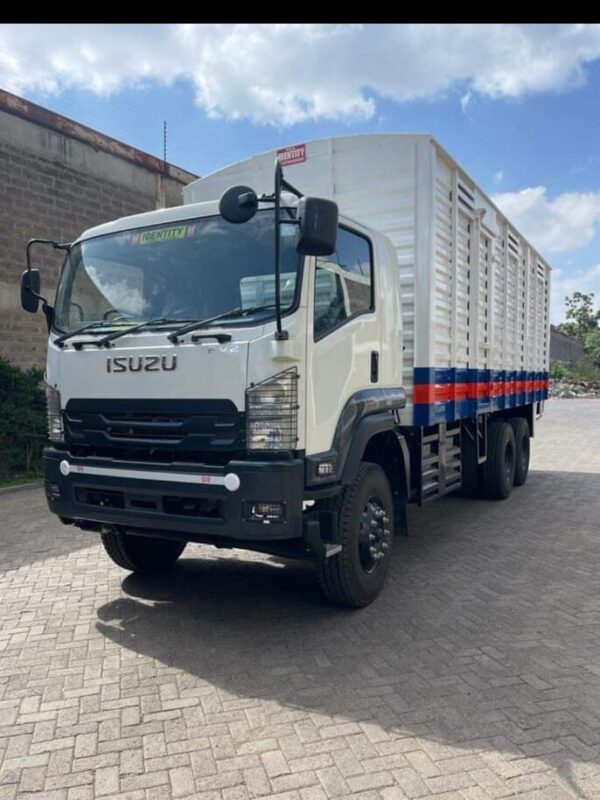
The F-Series is designed for businesses with more demanding transportation requirements.
Typical applications include:
i. Heavy cargo
ii. Construction
iii. Tipper Operations
iv. Large scale Logistics
v. Long distance transportation
vi. Agricultural and industrial applications
The range includes different chassis and drivetrain configurations, allowing businesses to select a truck according to their intended application.
Popular F-Series Models in Kenya
• FRR90N
• FVR90L
• FVR90P
• FTS34K
• FTS34L
• FVR34P
• FVZ34T
• FVZ34N
Depending on the model, F-Series trucks are available in configurations including 4×2, 4×4 and 6×4.
5. 4×4 and Different Drive Configurations
Drive configuration is an important consideration when choosing an Isuzu truck.
The N-Series includes the NPS81H, a 4×4 model designed for applications where additional off-road capability is required.
The F-Series also includes 4×4 options such as the FTS models, while larger F-Series trucks are available in configurations such as 6×4.
This gives businesses operating in construction, agriculture, industrial environments or areas with challenging road conditions the ability to select a configuration suited to their work.
Truck Body Options: Configure Your Isuzu for the Job
Choosing the right truck is only part of the process.
The body fitted to the chassis should also be designed around the work the truck will perform.
Depending on the application, Isuzu trucks can be configured with different body types, including Tankers, Tippers, Refrigerated Bodies, Dropside and Other custom commercial configurations
For example, a truck transporting fresh produce may require a very different body from one carrying construction materials. That’s why it is important to consider the complete truck configuration.
Build Your Isuzu Around Your Business
At Kamaru-Isuzu & UD Trucks, we sell Isuzu trucks and provide custom truck body configuration to help businesses get a vehicle suited to their specific operations
Whether you need an Isuzu truck for Retail distribution, construction, agriculture, deliveries, general cargo or heavy commercial transportation, Kamaru-Isuzu & UD Trucks, can help you find the right solution.
Ready to find the right Isuzu truck for your business?Tell us what you transport, where you operate and what you need the truck to do. Our team will help you identify the right Isuzu model and body configuration.
TALK TO OUR TRUCK SPECIALIST ON 0722320706

At Kamaru Auto Team, we specialize in delivering expert tips, industry insights, and hands-on advice tailored specifically for Isuzu and UD Trucks in Kenya. Whether you’re a fleet manager, truck owner, or aspiring operator, our blog is your go-to resource for smarter driving, efficient fleet management, and maximizing vehicle performance.
From maintenance, best practices to local market trends, we empower you with practical knowledge to keep your vehicles running smoothly and your business moving forward.


